
Across Europe, momentum is building behind a new era of clean energy. As the European Union prepares to unveil its first-ever Fusion Industrialization Strategy in early 2026, the past weeks have offered a glimpse of how public ambition and private innovation are converging to make fusion energy a defining force in Europe’s energy story.
At the centre of this movement stands Novatron Fusion Group (NFG), a pioneering fusion energy developer working at the coalface to bridge research, policy and industry. Through a series of high-profile events this fall, NFG has contributed to galvanize Europe’s fusion community around a common vision: turning decades of research into commercial reality.
Fusion4Energy Supply Chain Days – September 30–October 2, Barcelona, Spain
Starting in late September, NFG joined ‘Fusion4Energy Supply Chain Days’, a three-day event organized by Fusion for Energy, the EU body overseeing Europe’s contribution to the ITER project. The forum focused on strengthening collaboration with European companies and SMEs to build a robust fusion supply chain. Topics included sustainability, procurement mechanisms, and SME participation, reflecting the EU’s growing emphasis on industrial readiness. The event underscored that Europe’s path to fusion energy must be grounded in supply-chain resilience and industrial capability – foundations critical for turning scientific success into commercial power generation.
Fusion Energy Forward Symposium – October 3, Stockholm, Sweden
Momentum carried north to Stockholm, where NFG and Big Science Sweden co-hosted the “Fusion Energy Forward” symposium. The event convened global fusion leaders, including Pietro Barabaschi, Director-General of ITER, and Benoît Fourestie, Acting Head of Unit ITER at the European Commission.
Panels explored how Sweden can accelerate its shift from fusion research to industrialization focusing on supply-chain development, workforce training, and policy coordination. Experts including Carolina Losin (Westinghouse Electric Company), Linda Werner (St1 Nordic Oy), Sverker Werin (Lund University), and Karl Thedéen (Studsvik) emphasized the need to align academia, industry, and investment. Discussions highlighted a shared sense of urgency: Europe must prepare the infrastructure, skills, and partnerships to bring fusion energy to market.
Nordic Fusion Forum – October 20, Hanaholmen, Finland
Just weeks later, NFG hosted its set piece event of the annual calendar, the “Nordic Fusion Forum” in partnership with St1 at Hanaholmen, Finland. The event took place in a country that has already established a national fusion strategy and enabling legislation positioning itself as a leader in fusion innovation.
Bringing together policymakers, investors, and industry leaders, the forum explored policy frameworks and financing mechanisms needed to support commercial deployment. Delegates emphasized the importance of clear regulation and government backing.
“It’s really key to have a regulatory framework that’s proportionate and to have the government backing behind that because I think once that becomes legislation it gives the springboard and the platform to continue engagement and communication with all stakeholders;” said Nicola Barber, Group Director QSHE, Risk and Assurance, from the UKAEA
Echoing this perspective, Atte Harjanne, Member of the Finnish Parliament representing the Green Party, highlighted the government’s role in enabling innovation: “The government’s most important role is creating enablers for the ecosystem. So, making sure that it’s easy to innovate, that it’s easy to get funding, that it’s easy to pilot and scale up and try things out. Also creating a clear signal that this is a place where we want this type of thing to happen.”
The forum also reflected on fusion’s broader significance for the future of energy.
“I think we’ve come to the realization that if we want to have a sustainable future and a civilization like we have now and continue to have that in the future, we need to develop fusion as an energy source to be a key part of that energy supply… We need to develop fusion for civilization and for the generations to come,” said Søren Bang Korsholm, the Danish liaison to ITER and Senior Scientist in Plasma Physics & Fusion Energy at Technical University of Denmark
Turning concept to commercial reality
Together, these insights reinforced a central message: Europe’s fusion ecosystem requires coordinated policy, strong investment signals, and active collaboration between government, industry, and research to move from concept to commercial reality.
“Europe stands at a pivotal moment in moving from fusion research to industrial-scale energy. Recent forums have highlighted the power of collaboration between governments, industry, and academia, and crucially the importance of clear policies and investment to translate breakthroughs into real-world solutions,” said Mårten Löfberg, Director of Government and International Affairs at Novatron Fusion Group
From Research Leadership to Industrialization
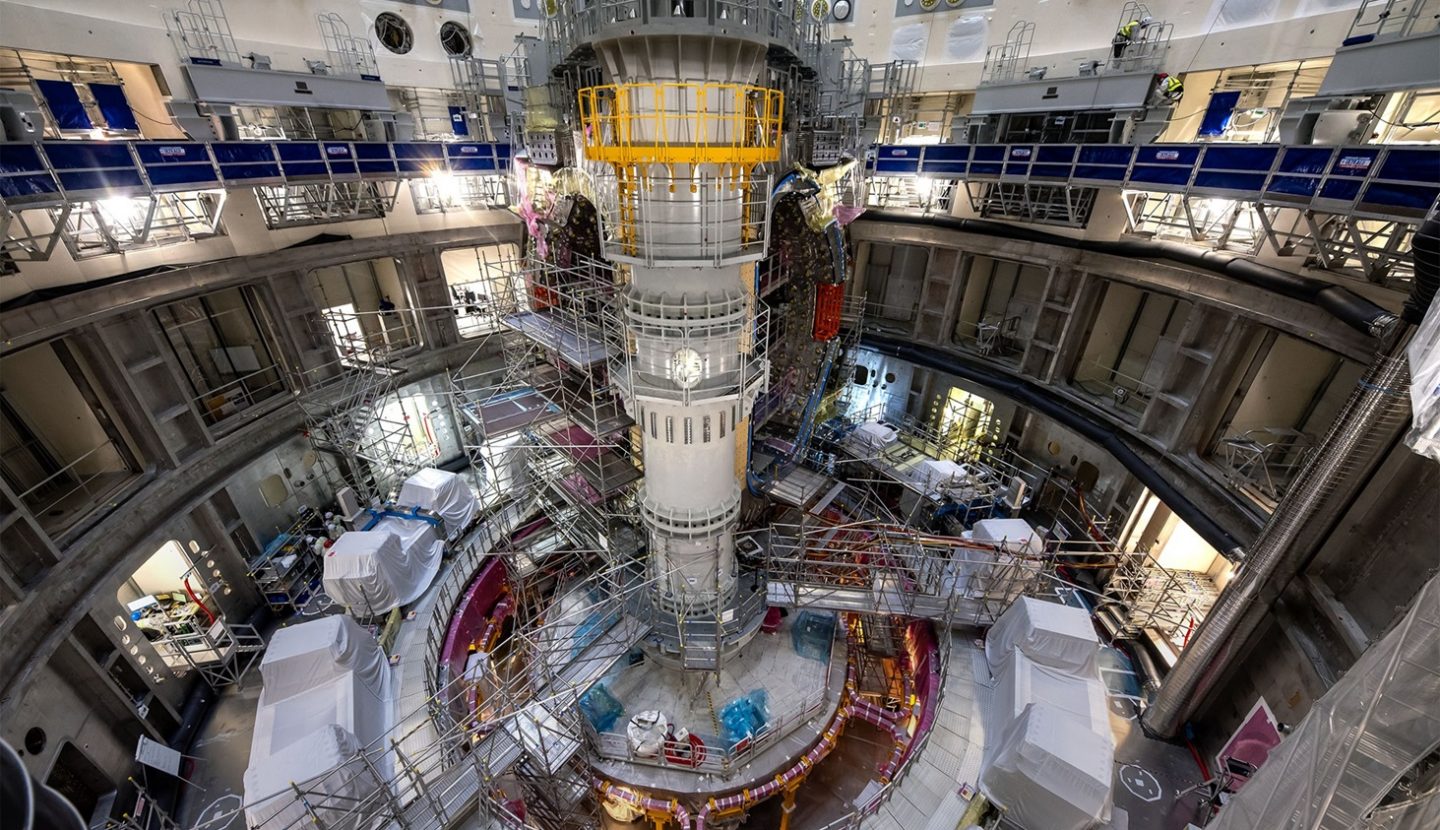
Europe has long been at the forefront of fusion research. Facilities like the Joint European Torus (JET) in the United Kingdom and ITER have delivered world-class breakthroughs in plasma physics and reactor design. Germany’s Wendelstein 7-X stellarator continues to push the boundaries of plasma stability, while Italy and Spain have contributed through component development and fundamental research.
Until now, Europe’s approach has been primarily scientific, focused on solving the fundamental challenges of confining plasma and producing net energy. The new Fusion Industrialization Strategy, expected in early 2026, marks a shift in emphasis: from laboratory success to industrial deployment, ensuring that Europe can convert its scientific leadership into a robust, scalable fusion industry.
Driving Forces Behind the Strategy
The forthcoming strategy is shaped by three central imperatives:
- Climate Commitments: Europe is legally bound to reach net-zero emissions by 2050. Fusion, as a clean and effectively limitless power source, is positioned as a cornerstone of the continent’s long-term energy mix.
- Energy Security: In an era of geopolitical volatility, fusion offers Europe the opportunity to reduce dependence on imported fossil fuels and strengthen resilience through domestically produced baseload power.
- Industrial Opportunity: Beyond energy generation, fusion promises economic growth, job creation, and technological leadership. The strategy aims to create a new industrial sector built on European innovation and supply-chain capability.
A Thriving Ecosystem of Innovation
Europe already hosts one of the world’s most dynamic fusion ecosystems. Private fusion companies are active across the continent, working alongside national laboratories and universities. Startups are advancing novel reactor designs, high-temperature superconductors, and advanced plasma control systems, while established industrial players are scaling up component manufacturing.
Germany has seen record levels of private investment into stellarator-based ventures. In the United Kingdom, the STEP program is pioneering pathways from demonstration to commercialization. France’s role as ITER host continues to position it as a hub for large-scale engineering and international collaboration.
The recent ITER leadership visit to Sweden and the Nordic Fusion Forum in Finland reflect how Europe’s fusion ecosystem is evolving through cross-border cooperation and engagement across industry, academia, and government.
Bridging the Gap: Policy and Finance
One of the EU strategy’s core goals will be to bridge the gap between research and commercialization. Despite enormous scientific progress, fusion still faces technical and financial hurdles before it can reliably deliver power to the grid. Public investment, harmonized regulation, and innovative financing mechanisms will be essential to de-risk private capital and accelerate deployment.
The strategy is expected to introduce measures to:
- Foster public–private partnerships aligning national labs and private developers;
- Establish standardized licensing and safety frameworks across member states;
- Deploy dedicated EU financing tools within the clean energy portfolio to catalyze first-of-a-kind industrial projects.
Positioning Europe on the Global Stage
The race to commercial fusion is now global. The United States, China, and Japan are investing billions into their own pathways. Europe’s Fusion Industrialization Strategy represents both a defensive and offensive move protecting decades of research leadership while positioning European companies to compete in what could become a trillion-dollar global industry.
By explicitly targeting industrialization, the EU is signaling that fusion is no longer an experimental pursuit, but a strategic pillar of Europe’s future energy and industrial policy. With companies like Novatron Fusion Group helping shape the dialogue from the Nordic region to Brussels, Europe is poised to transform its fusion leadership into tangible, transformative impact for generations to come.